
The journey of 3D printing, also known as additive manufacturing, is a fascinating tale of innovation and technology. This incredible technology, which today empowers industries ranging from healthcare to aerospace, has evolved significantly since its inception. In this blog post, we'll explore the key milestones in the history of 3D printing, discuss its current applications, and point out some handy tools for 3D printing enthusiasts.
Early Beginnings: The Birth of 3D Printing
The concept of 3D printing can trace its roots back to the 1980s. It was then that Dr. Hideo Kodama of the Nagoya Municipal Industrial Research Institute first invented a rapid prototyping technique, laying the groundwork for what would become 3D printing. Shortly after, in 1986, Charles Hull developed stereolithography (SLA), a process that used ultraviolet lasers to cure photopolymer resin layer by layer to create solid objects. This was a seminal moment, as it resulted in the first patent for stereolithography and kick-started the 3D revolution.
Evolution and Commercial Adaptation
Throughout the late 1980s and 1990s, 3D printing technology advanced rapidly. In 1988, the company 3D Systems launched the first commercial 3D printer, the SLA-1. This period also saw the development of Selective Laser Sintering (SLS) and Fused Deposition Modeling (FDM), technologies that remain popular today.
The 21st century brought about significant democratization of 3D printing. With the expiration of several patents in the 2000s, public interest in 3D printing surged, leading to the creation of open-source projects like RepRap, which inspired many to build their own 3D printers at home.
Modern-Day Applications
Today, 3D printing has permeated various industry sectors, proving invaluable in areas such as:
- Healthcare: Bio-printing of tissues and organs, creating custom prosthetics, and even printing patient-specific surgical tools.
- Aerospace: Manufacturing lightweight and complex components for aircraft and spacecraft, which are impossible to produce with traditional methods.
- Automotive: Customizing vehicle parts and speeding up the prototyping process.
- Consumer Goods: Producing everything from jewelry to musical instruments with intricate designs.
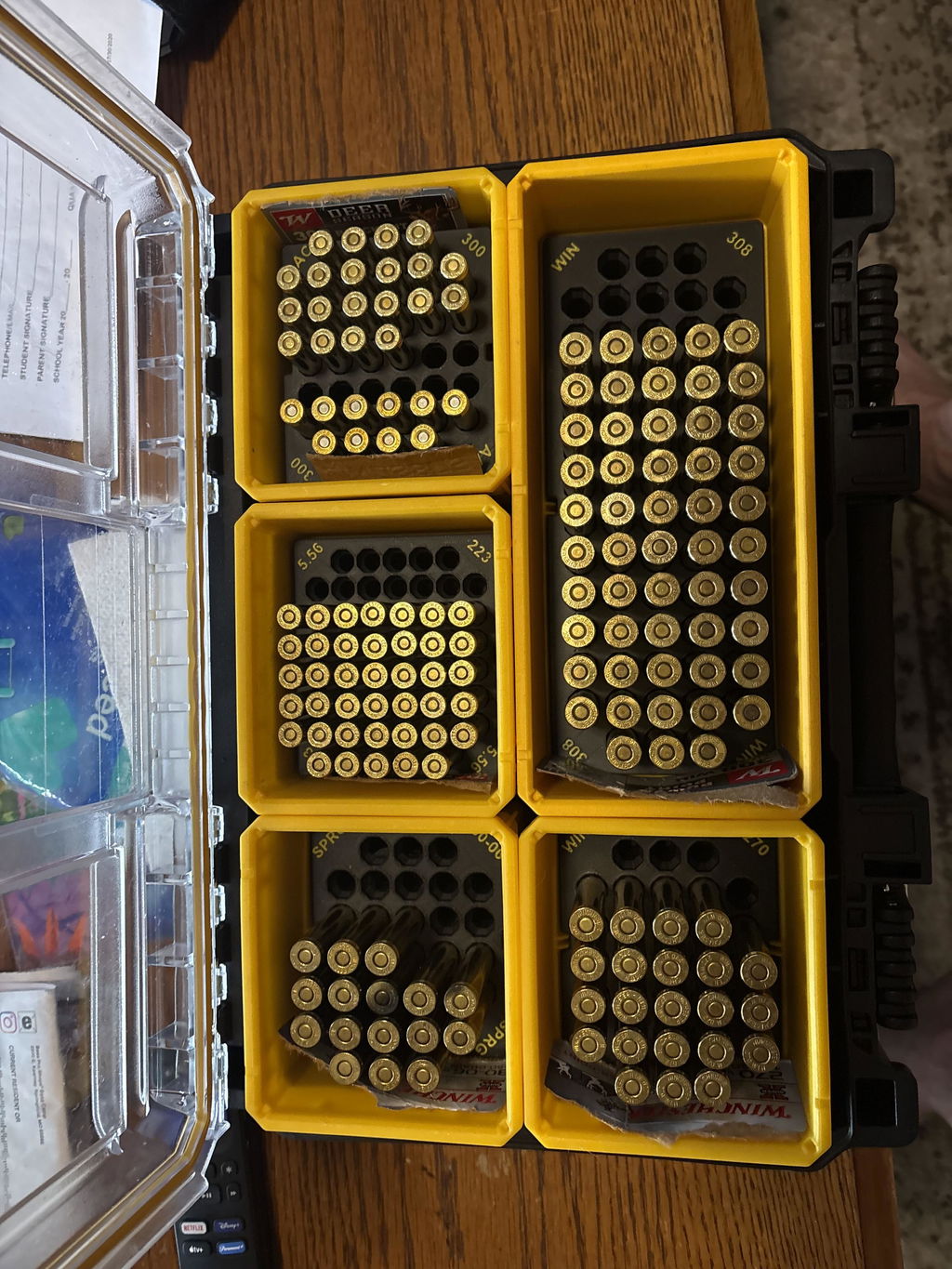
Moreover, the accessibility of 3D printing technology has seen a rise in desktop 3D printers. Enthusiasts and hobbyists can use platforms like WM Prints for resources and tools to enhance their Creator's journey. One such useful product is the Lyman Type prep tools holder, perfect for organizing tools while working on 3D printed projects.
The Future of 3D Printing
Looking forward, the future of 3D printing appears limitless. Continuous advancements in materials, speed, and printer resolution mean that we are on the cusp of transformative applications, such as in the fields of construction (3D printing buildings) and food (3D-printed cuisines).
As we traverse further into this exciting frontier, platforms like WM Prints will continue to support creators by providing vital tools and resources to facilitate innovation.
In conclusion, from its early conception to its diverse applications today, 3D printing has transformed from an experimental process into a mainstream manufacturing phenomenon, with endless possibilities on the horizon.