
As a 3D printing enthusiast, achieving the best print quality involves understanding the nuances of different filament types. Each filament material has unique properties that cater to specific needs and applications, from durability to flexibility. In this post, we will explore some common filament types and their optimal applications to help you make an informed decision for your next project. Visit our website at WM Prints for more products and information.
PLA (Polylactic Acid)
PLA is perhaps the most popular filament type due to its ease of use and low printing temperature. It is biodegradable and environmentally friendly, making it a great choice for beginners and eco-conscious makers. Its ease of use comes with a trade-off in strength and flexibility, but it remains ideal for prototyping and making decorative pieces.
ABS (Acrylonitrile Butadiene Styrene)
ABS is known for its durability and impact resistance, suitable for functional parts that need to withstand stress. However, ABS should be used in a well-ventilated area, as it releases fumes during printing. It requires a heated bed to prevent warping, adding another layer of complexity to the print setup.
PETG (Polyethylene Terephthalate Glycol)
Combining the properties of PLA and ABS, PETG offers strength and flexibility with less warping. It is food-safe when printed without additives and can be used for items such as containers and industrial parts. PETG is slightly more challenging to print than PLA but provides a good balance between ease and functionality.
TPU (Thermoplastic Polyurethane)
TPU is a flexible filament known for its rubber-like texture. It’s excellent for printing parts that need to bend, like phone cases or gaskets. The key challenge with TPU is avoiding clogging, which requires a slower print speed and a direct-drive extruder setup for optimal prints.
Nylon
Nylon is one of the strongest filaments, renowned for its toughness and flexibility. It's ideal for prints needing high strength and durability, such as gears and mechanical parts. It requires a high temperature and is prone to moisture absorption, so proper storage and drying are necessary before printing.
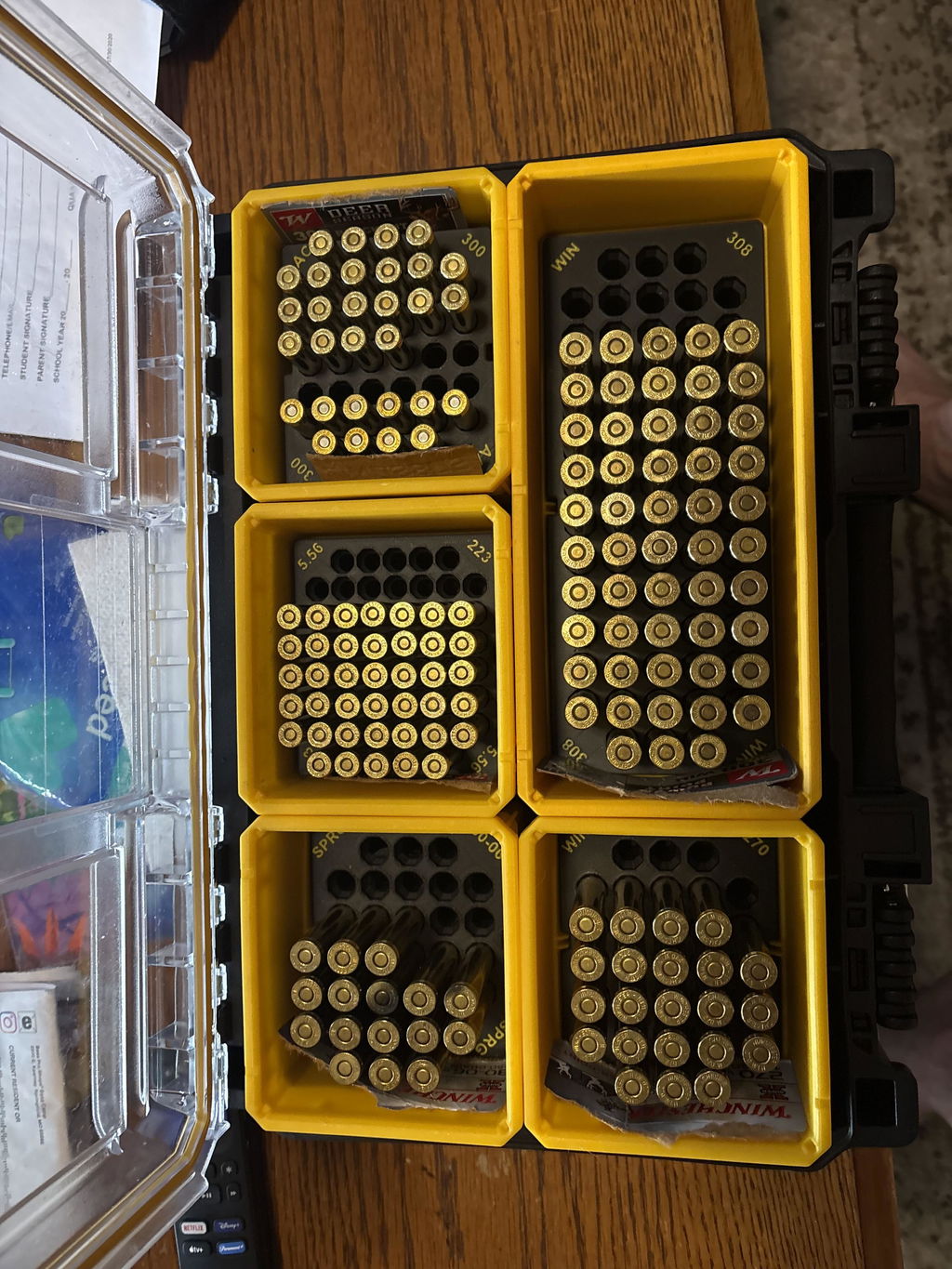
For those interested in organizing their tools, you might find our Lyman Type Prep Tools Holder an excellent addition to your workspace.
Choosing the right filament depends on the specific needs of your project, and understanding each type's unique properties is essential. Experimentation will be key to finding the best material for your use cases.
For more insights and a full range of 3D printing accessories, tools, and tips, explore our site at WM Prints.