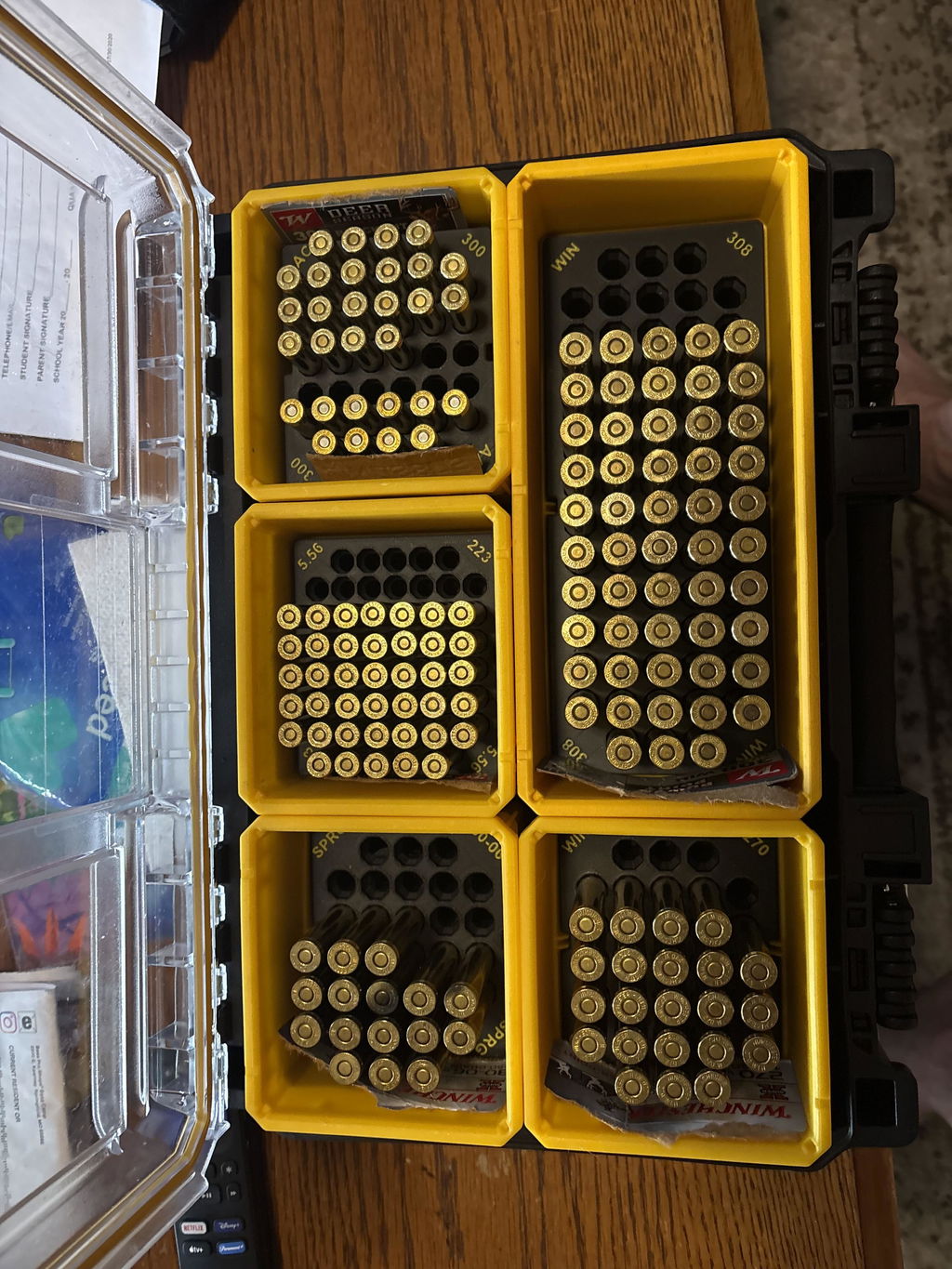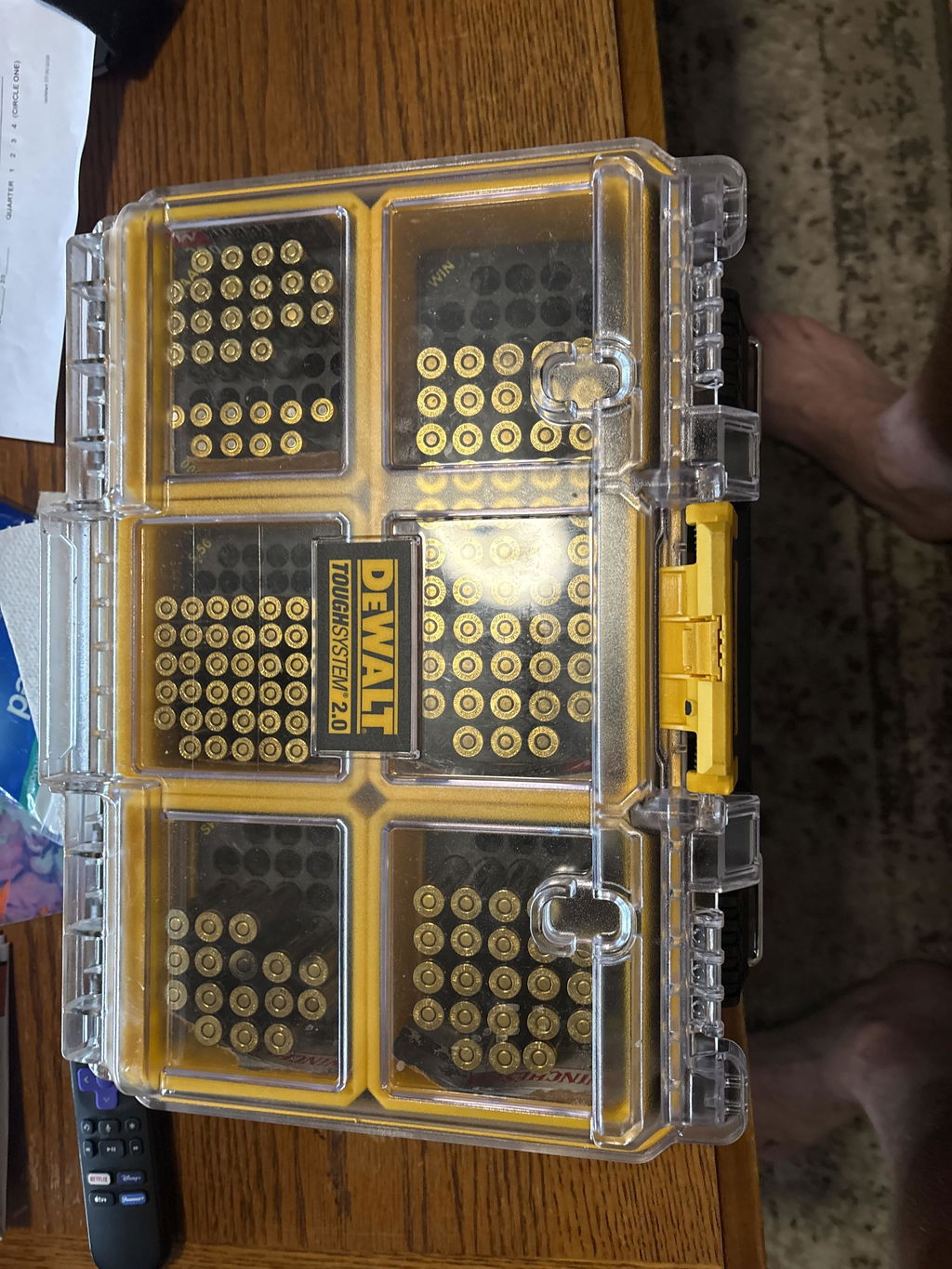

If your loading bench is doing that familiar shuffle - brass in one spot, bullets in another, tray half hanging off the edge - a hornady ammo tray holder stops being a nice extra and starts looking like a real workflow upgrade. The right holder does not just park a tray. It keeps your bench organized, protects your process from accidental bumps, and makes each stage of reloading easier to manage.
That matters more than it sounds. On a busy bench, small inefficiencies stack up fast. Reaching farther than you need to, shifting trays around to clear space, or worrying about a loaded tray getting tipped can slow down the entire session. Serious reloaders usually do not need more gadgets. They need fewer interruptions.
What a hornady ammo tray holder actually solves
A tray holder is simple by design, but the payoff is practical. It gives your Hornady ammo tray a dedicated position so the tray is not floating around your work surface or taking up space where tools and components need to go.
The first benefit is stability. Ammo trays are useful on their own, but they work best when they are not sitting loose on a crowded bench. A holder reduces the chance of sliding, tipping, or getting nudged out of position while you are handling brass, checking powder, or seating bullets.
The second benefit is consistency. When your tray has a fixed place, your hand movements become more repeatable. That may sound minor, but repeatable workflow matters on a reloading bench. Anything that cuts down on wasted motion helps you stay focused on the task instead of the layout.
The third benefit is space management. Many benches collect small tools, calipers, funnels, prep tools, and bins as a session goes on. A proper holder gets the tray where it belongs without forcing you to constantly rearrange everything else.
Why fit matters more than generic storage
This is where a lot of people make the wrong comparison. A hornady ammo tray holder is not interchangeable with a random organizer, a universal desktop rack, or a piece of bent sheet metal that happens to hold something roughly tray-shaped.
Fit matters because Hornady trays have specific dimensions, edge profiles, and handling needs. A purpose-built holder should support the tray securely without being too tight to remove easily. If it grips too loosely, the tray can wobble. If it grips too aggressively, removal becomes annoying, especially when the tray is loaded.
Material matters too. In a bench environment, thin or brittle storage accessories wear out fast. A holder should feel solid, keep its shape, and handle normal use without flexing like a disposable add-on. That is one reason many serious users prefer well-designed PETG parts over bargain-bin alternatives. The goal is not just to hold a tray today. It is to keep doing it after months of bench use, transport, temperature swings, and repetitive handling.
Features worth paying attention to
Secure tray retention
The holder should keep the tray stable during normal bench activity, but it should not fight you when it is time to remove or swap trays. Good retention is controlled, not excessive. You want confidence, not friction for its own sake.
Bench-friendly footprint
A large holder can solve one problem while creating another. If it eats too much bench space, the gain disappears. The better designs keep a compact footprint while still providing enough support to avoid rocking or tipping.
Orientation that matches your process
Some reloaders want the tray flat and fixed in place. Others prefer a holder that positions the tray for faster access depending on bench layout, press location, and dominant hand. There is no single correct setup here. It depends on how you move through sizing, priming, charging, and seating.
Material durability
A tray holder should not feel like a temporary print. Layer quality, wall strength, and material choice all affect long-term use. PETG is a strong fit for this category because it handles workshop conditions better than more brittle plastics and offers the kind of durability serious users expect from bench accessories.
Bench setup changes how useful the holder becomes
Not every reloading bench needs the same solution. A compact bench in a garage corner has different demands than a dedicated loading room with permanent stations. That is why the best tray holder for one user may be overkill or underbuilt for another.
If your bench is small, a holder helps most when it reclaims workspace and keeps trays from drifting into your tool area. If your bench is large, the value is often more about positioning. A fixed tray location can make your process cleaner and more efficient, especially if you are running batches and moving brass through multiple stages.
Mobility changes things too. If your setup gets packed away between sessions or transported in a case or modular tool system, you need more than a tray perch. You need retention, durability, and a design that makes sense outside a stationary bench environment.
Hornady ammo tray holder options and trade-offs
When evaluating Hornady ammo tray holder options, there is always a trade-off between simplicity and specialization. A very basic holder may do enough if all you want is to stop tray movement on a flat bench. That can be a good choice for a minimal setup.
A more purpose-built design is usually better for users who care about exact fit, repeatable placement, and integration with a broader storage system. That matters if your bench is already organized around specific platforms, inserts, or dedicated positions for tools and components.
Customization can also be worth it. If your workflow includes multiple tray sizes, branded systems, or storage cases that need exact compatibility, off-the-shelf generic solutions often start to show their limits. This is where niche manufacturers tend to outperform broad-market organizers. They design for actual use cases, not vague compatibility claims.
Who benefits most from adding one
The reloader who gains the most from a tray holder is usually not the casual user loading a small batch once in a while on an otherwise empty bench. The bigger benefit goes to the person who values consistency, keeps a tight workspace, or runs enough volume to notice every repeated motion.
That includes reloaders working in limited space, competitive shooters who care about efficient prep, and anyone building a more professional bench layout. It also fits mobile users who transport equipment and want accessories that hold position instead of shifting around.
For that kind of customer, a holder is not about novelty. It is part of a smarter system. That is the same logic behind custom inserts, prep tool holders, and case-specific organization. Better access and better placement make the whole bench work better.
How to tell if a holder is well designed
A good holder usually looks simple. That is a positive sign, not a drawback. Bench accessories do not need visual complexity. They need to perform cleanly and predictably.
Look for signs that the design is built around real bench use. Does it appear to support the tray evenly? Is the tray likely to sit square and stable? Does the part look thick enough in the right places, or is it relying on thin sections that may fatigue over time? Does removal seem natural, or awkward?
This is also one area where experience in compatibility-driven products matters. Brands that routinely design around exact-fit systems tend to understand tolerance, workflow, and real-world handling better than sellers making broad one-size-fits-all accessories. WM Prints is built around that exact kind of precision-fit problem solving.
The real standard is whether it saves time
The best hornady ammo tray holder is the one that makes your bench easier to use every single session. Not flashier. Not more complicated. Just easier.
If it stabilizes the tray, reduces clutter, and puts your components where your hands naturally need them, it is doing its job. If it also holds up to regular use and fits your bench without compromise, even better.
Reloading setups improve one smart decision at a time. A tray holder is a small part, but small parts are often what separate a bench that works from a bench that constantly gets in your way. Choose the one that fits your process, and the benefit will show up every time you sit down to load.